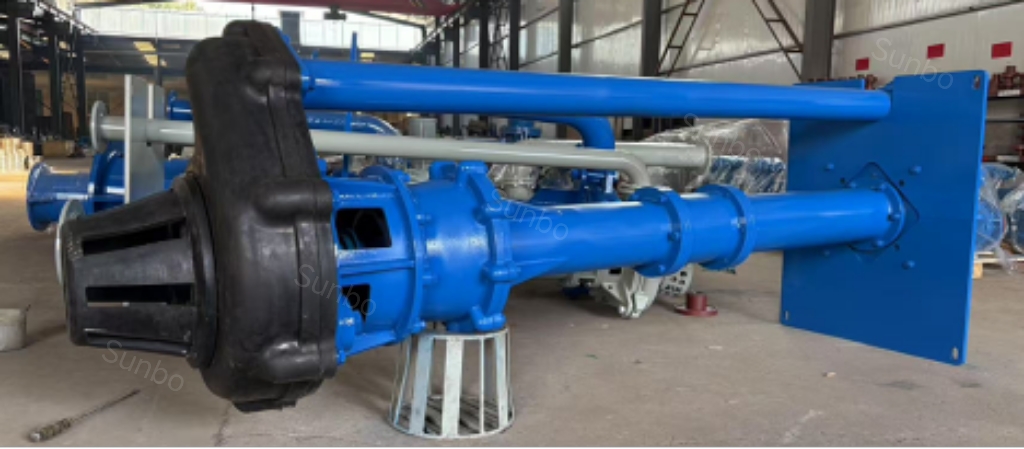
In the practical application of slurry pumps, balancing equipment performance, service life, and procurement & maintenance costs has always been a core concern for users. Recently, our company successfully provided a customized solution for a customer using a vertical slurry pump on-site: "Rubber-lined pump head + standard metal vertical sump pump configuration for the remaining components." This solution significantly reduces the customer's overall cost while meeting transport requirements, and has received high recognition from the customer.
Operating Condition Analysis: Non-corrosive slurry, fine sand without sharp edges. Both materials are applicable.
The customer uses a vertical sump pump to transport sand-based slurry. The slurry itself is non-corrosive, with particle erosion being the primary wear mechanism. From a material selection perspective:
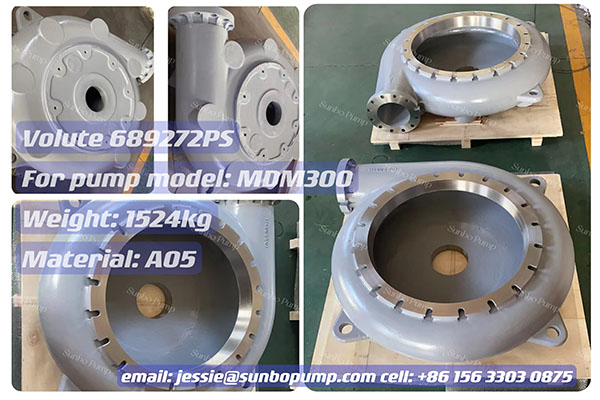
A05 material (high-chrome wear-resistant cast iron): High hardness, good wear resistance, and high overall strength.
R55 rubber lining material: Good elasticity, excellent erosion resistance, cushioning against particle impact, and particularly suitable for sand particle transport.
Both materials technically meet the requirements of this on-site application.
Solution Design: Optimization from "Full Rubber Lining" to "Pump Head Rubber Lining"
Initially, a fully rubber-lined pump (R55) was the ideal choice, offering excellent corrosion resistance and fine sand transport capabilities. However, the standard fully rubber-lined sump pump has a significantly higher procurement cost than a metal sump pump due to the rubber lining process, exceeding the customer's final budget.
Alternatively, while a standard metal sump pump meets the initial procurement budget, the long-term replacement cost of wear parts is much higher than that of a rubber-lined type. Furthermore, it has been verified that under the customer's specific conditions, R55 rubber wear parts have a longer service life than A05 material. This results in higher replacement costs and more frequent maintenance shutdowns.
To address this contradiction, our technical team, after in-depth discussion with the customer's on-site engineers, proposed a compromise "metal-rubber combination" solution:
Rubber-lined pump head only: The pump head (including critical wear parts such as the impeller and casing) uses R55 rubber lining. This leverages the rubber's elasticity and erosion resistance to handle the high-speed impact and friction of sand particles, extending the pump head's life.
Remaining components (support stand, discharge pipe, mounting plate, shaft, etc.) use standard metal sump pump materials: Since the slurry is non-corrosive, this change does not affect the product's service life but significantly reduces manufacturing costs. Through technical expertise, our company has achieved an effective connection between metal and rubber components, providing the customer with a long-term, effective, low-cost solution.
Solution Advantages: Leveraging strengths and calculating the "economic balance" for the customer
The implementation of this solution has achieved the following significant results:
Performance without compromise: The rubber-lined pump head fully utilizes the advantages of rubber in sand transport, and the on-site feedback that "rubber works well for sand" has been technically validated.
Significantly reduced procurement cost: Compared to a fully rubber-lined pump, this solution reduces the price by approximately 30-40%, effectively lowering the customer's initial purchase burden.
Controllable maintenance costs: When the rubber lining in the pump head wears out, only the rubber parts need replacement, which is more economical than replacing A05 wear parts. Moreover, the customer highly recognizes the service life of rubber wear parts under these conditions.
Balanced ease of use and replacement: The metal structure provides high strength and reliable support, while the rubber lining offers good wear resistance. This combination avoids the problems of high replacement costs for "all-metal" pumps and high initial purchase costs for "all-rubber" pumps.
Customer Feedback: A practical solution that truly solved the problem
The customer's on-site representative stated: "The manufacturer didn't just push the most expensive product. Instead, they considered our actual usage and cost constraints, providing this 'middle-ground' solution. It works very well – durable, cost-effective, with reasonable replacement costs. We truly appreciate this practical and service-oriented attitude."
Conclusion: Customization is not about "maximizing specifications," but about precise matching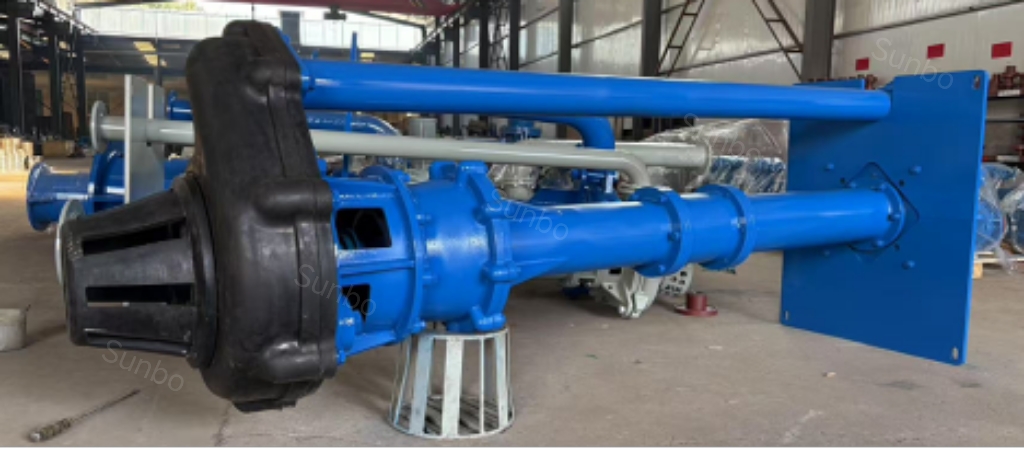 As a professional slurry pump manufacturer, we always adhere to the principle: A custom solution does not equal the highest specifications; instead, it means the best combination for the customer's specific operating conditions, budget, and usage habits. Whether it's all-metal, all-rubber, or a metal-rubber combination, we provide objective and actionable recommendations based on on-site parameters such as slurry properties, particle size, pH value, temperature, head, and concentration.
If you are facing a similar selection challenge – non-corrosive conditions, sand-particle wear (without sharp edges), and seeking a balance between performance and cost – please contact our technical team. We will tailor the most economical wear-resistant transport solution for you.
Let me know if you'd like any adjustments to tone, terminology, or formatting.